


Solar & Electric Egg Incubator Hatching Machine: The Ultimate Guide to Automatic Egg Incubation
What Is an Egg Incubator Hatching Machine?
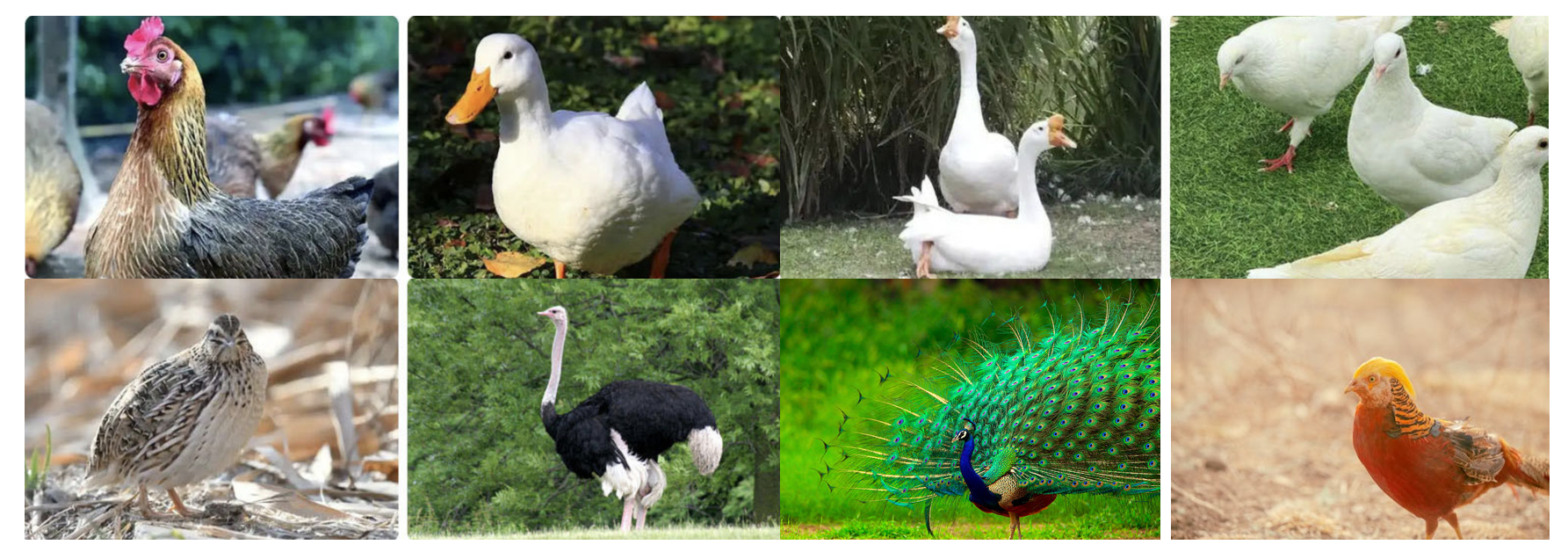
An egg incubator hatching machine is an intelligent piece of poultry-rearing equipment that simulates the natural incubation environment of birds, automatically controlling temperature, humidity, egg turning, and ventilation. This unit serves a dual purpose: it handles both the initial incubation and the final hatching stages, eliminating the need to purchase a separate hatcher. It is suitable for a wide range of poultry eggs, including those from chickens, ducks, geese, quail, pigeons, and pheasants. Whether you are a small-scale backyard poultry keeper or a large commercial hatchery, a high quality hatching eggs incubator is critical to achieving high hatch rates and healthy chick development.

Working Principle
Simulating the environment of a brooding hen, the system utilizes an intelligent microcomputer motherboard to monitor internal temperature and humidity, automatically controlling heating, humidification, fan circulation, and the egg-turning mechanism:
1. Constant Temperature System: Maintains a stable temperature for embryonic development (standard 37.8°C for chicken eggs);
2. Humidification System: Maintains internal humidity to prevent moisture loss from the eggs;
3. Automatic Egg Turning: Periodically turns the hatching eggs to prevent the embryo from adhering to the shell and to ensure uniform heating;
4. Forced Ventilation: Continuously circulates air to supply oxygen and exhaust carbon dioxide;
5. Alarm and Protection: Triggers automatic audible and visual alarms in the event of abnormal temperature/humidity, power failure, or fan malfunction, thereby reducing the risk of egg loss.
Product Categories
1. **Compact Home Models**: Capacity of 24–100 eggs; features a transparent housing and roller-style egg trays; simple to operate; suitable for households, small-scale breeders, and educational experiments; available in 110V or 220V versions.
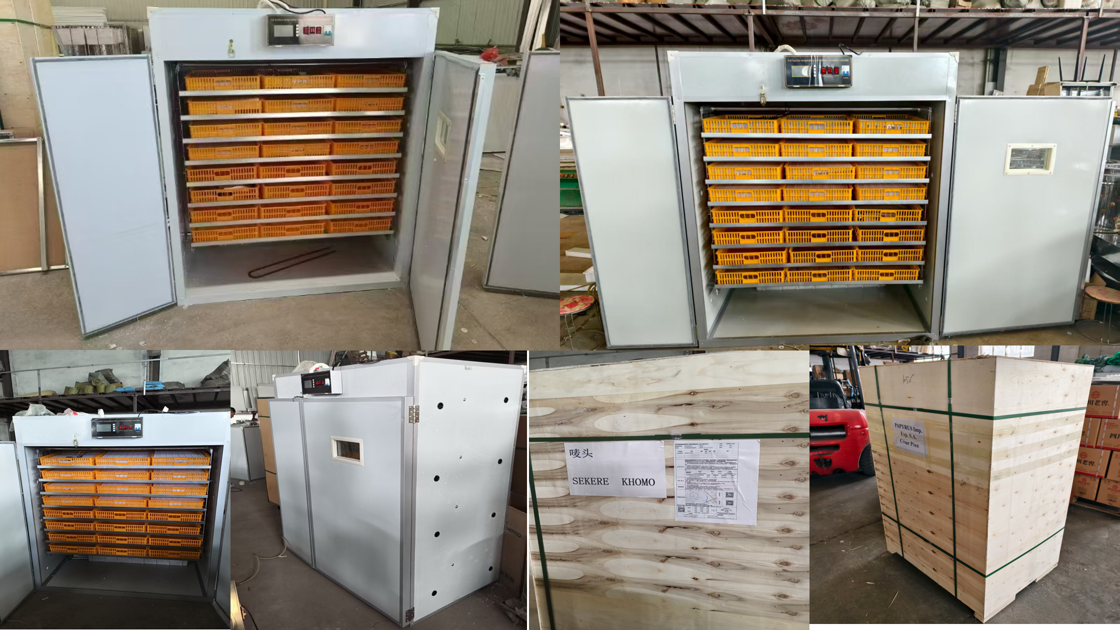
2. **Mid-sized Commercial All-in-One Units**: Capacity of 100–1,000 eggs; features an insulated color-steel cabinet and tiered egg racks; fully automated operation; the preferred choice for small-to-medium hatcheries.
3. **Large-scale Industrial Incubators**: Capacity exceeding 1,000 eggs; designed for large-scale hatchery operations; compatible with hatching egg disinfection and chick sorting assembly lines; suitable for large commercial hatcheries.
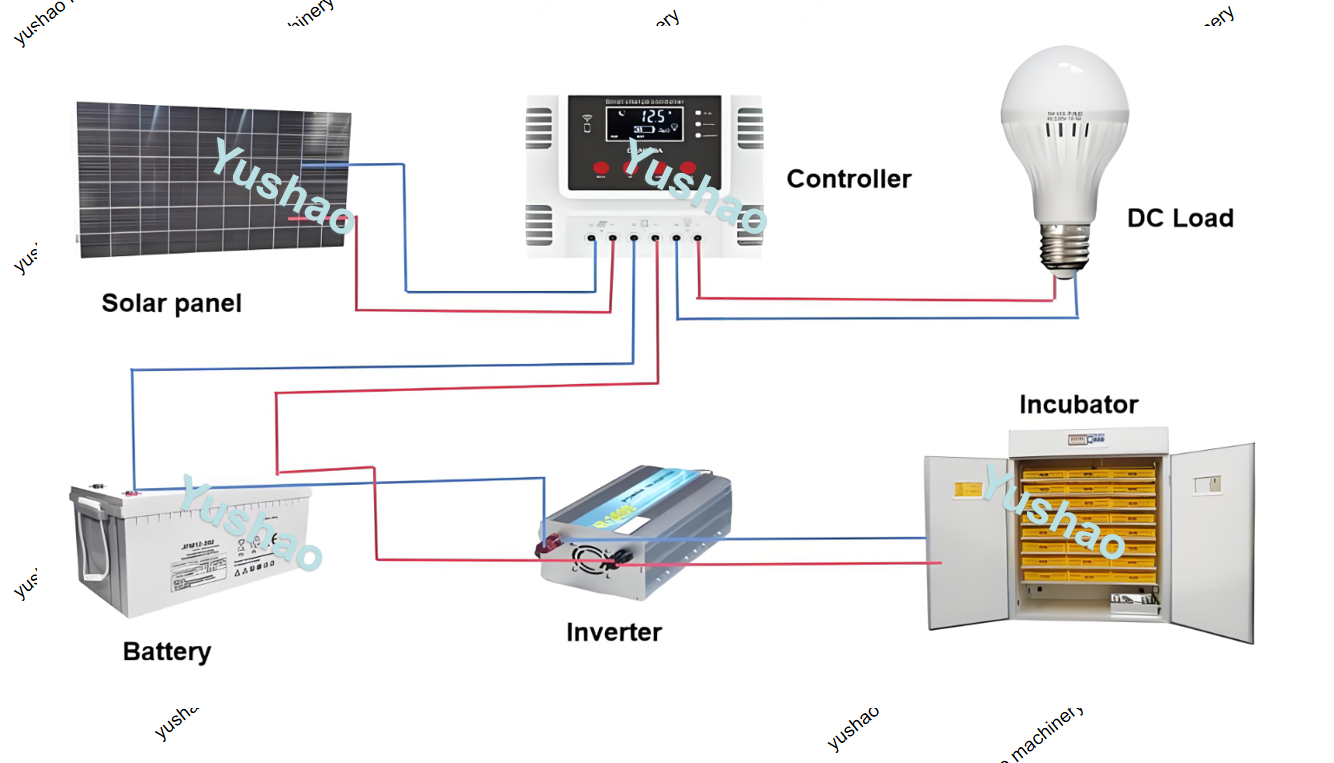
Power Supply Options: Standard 220V; **Dual-power models (220V + 12V backup)** featuring automatic switching during power outages; solar power systems can also be integrated for use in remote areas with unreliable electricity.
Key Power Options: Solar and Electric Egg Incubators
Today's leading egg incubators offer flexible power solutions to meet different usage scenarios, with solar and electric being the two most popular options.
Electric Egg Incubator Hatching Machine
Electric hatching eggs incubators are the standard choice for indoor operations and locations with consistent access to the power grid. These models deliver stable, continuous power to maintain precise environmental conditions inside the incubator. With automatic regulation systems, electric egg incubators eliminate the need for constant manual monitoring, making them ideal for beginners and professional hatchers alike. They work seamlessly for year-round incubation of chicken, duck, goose, quail, and other poultry eggs.
Solar Egg Incubator Hatching Machine
Solar powered egg incubators are a game-changer for off-grid locations, rural farms with unreliable electricity, and eco-conscious poultry producers. A solar egg incubator harnesses renewable energy from the sun to power all core functions: temperature control, humidity regulation, automatic egg turning, and ventilation. This not only cuts down on energy costs but also ensures incubation continues uninterrupted during power outages. Many solar egg incubators also come with backup battery or electric connectivity for extra reliability on cloudy days.
Core Structural Components
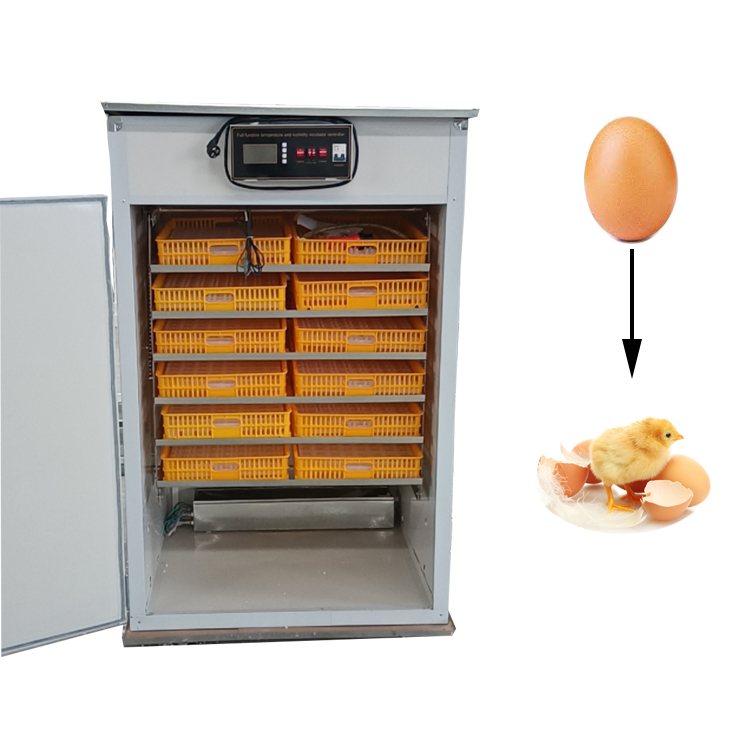
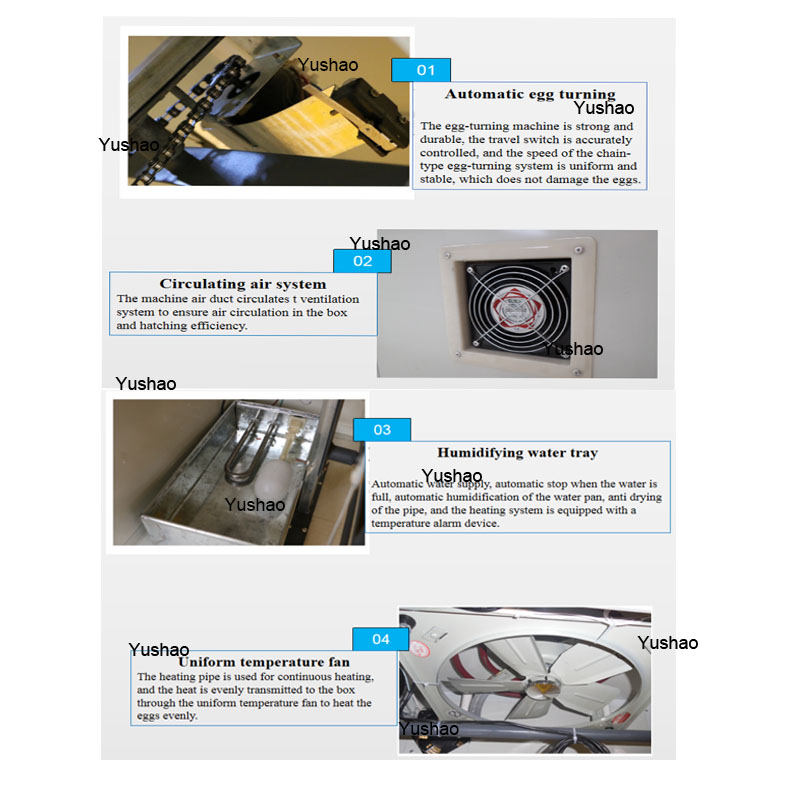
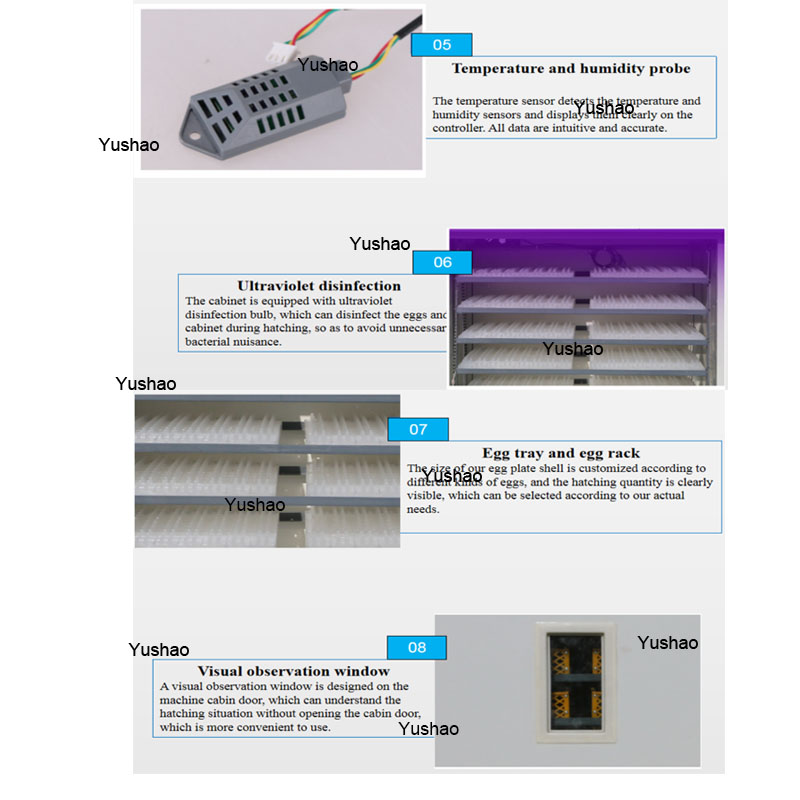
1. **Insulated Cabinet**: Constructed with dual-layer color-coated steel panels and a high-density insulation core; offers excellent thermal insulation to reduce energy consumption, is corrosion-resistant, and is easy to clean and disinfect.
2. **Microcomputer Intelligent Control System**: Features a large LCD screen displaying real-time temperature, humidity, incubation days, and the egg-turning countdown; supports one-touch mode switching for various species (chicken, duck, goose, quail).
3. **Egg-Turning Mechanism**: Motor-driven egg racks or rollers; automatic turning every 2 hours by default (adjustable angle); manual start/stop capability.
4. **Heating and Humidification Components**: Heating element combined with water-circulation humidification for stable humidity levels.
5. **Circulation Fan & Ventilation Vents**: Ensures internal air circulation; maintains a temperature differential of ≤0.3°C for uniform temperature distribution throughout the cabinet.
6. **Egg Trays / Hatching Trays**: Made of food-grade plastic with adjustable spacing to accommodate various egg sizes; hatching nets can be installed for the final hatching stage.
7. **Alarm Module**: Audio-visual alarms for high/low temperature, high/low humidity, and sensor malfunctions.
8. **Optional Accessories**: Egg candler, solar power module, automatic water supply system.
Specifications:
- Temperature control range: 5–50°C; control precision: ±0.1°C
- Humidity range: 0–99% RH; control precision: ±5% RH
- Egg turning interval: Customizable (0.1–99.9 hours); factory default is every 2 hours
- Egg turning angle: Adjustable (45°–180°)
- Voltage: AC 220V / AC 110V; optional DC 12V backup power supply
- Materials: Color-coated steel cabinet + food-grade PP plastic egg trays
- Operating environment: Optimal ambient temperature 15–35°C
| Model | ZX-528 | ZX-1056 | ZX-2112 | ZX-3168 | ZX-5280 | ZX-9856 |
| Capacity(Chicken) | 528 | 1056 | 2112 | 3168 | 5280 | 98565 |
| Power | 300w | 300w | 500w | 1000w | 2000w | 2900w |
| Voltage | 220v | 220v | 220v | 220v | 220v | 220v |
| Size (mm) | 950*670*1000 | 970*700*1400 | 1400*870*1700 | 1800*870*1800 | 1800*1130*1900 | 2000*1900*2350 |
| Weight (kg) | 60 | 85 | 133 | 175 | 220 | 460 |
| There are other models, welcome to know more details. | ||||||
Benefits of a Modern Automatic Hatching Eggs Incubator
Investing in a well-built egg incubator gives you full control over the hatching process, with benefits that include:
✅ **High Hatch Rate (95%–98%)**: Precise temperature and humidity control simulating natural incubation; produces robust chicks with a low rate of weak hatchlings.
✅ **Fully Automated Operation**: Automatic temperature and humidity control, egg turning, and ventilation; requires no constant monitoring, saving labor costs.
✅ **Multi-Species Compatibility**: Suitable for chickens, ducks, geese, pigeons, quails, pheasants, etc.; adjustable egg tray spacing.
✅ **Dual Power Supply Protection**: Safeguards eggs during power outages; ideal for regions with unstable power grids (e.g., Africa, the Middle East, Southeast Asia).
✅ **Thickened Insulated Cabinet**: Energy-efficient design; saves 30%–50% more electricity compared to older models.
✅ **CE Certified**: Meets overseas market entry requirements; supports OEM customization and voltage options (110V/220V/380V).
✅ **Removable Egg Trays**: Easy to clean and disinfect; resistant to bacterial growth and simple to maintain.
✅ **Smart Fault Alarms**: Real-time alerts to minimize losses caused by incubation failure.
Complete Incubation Process
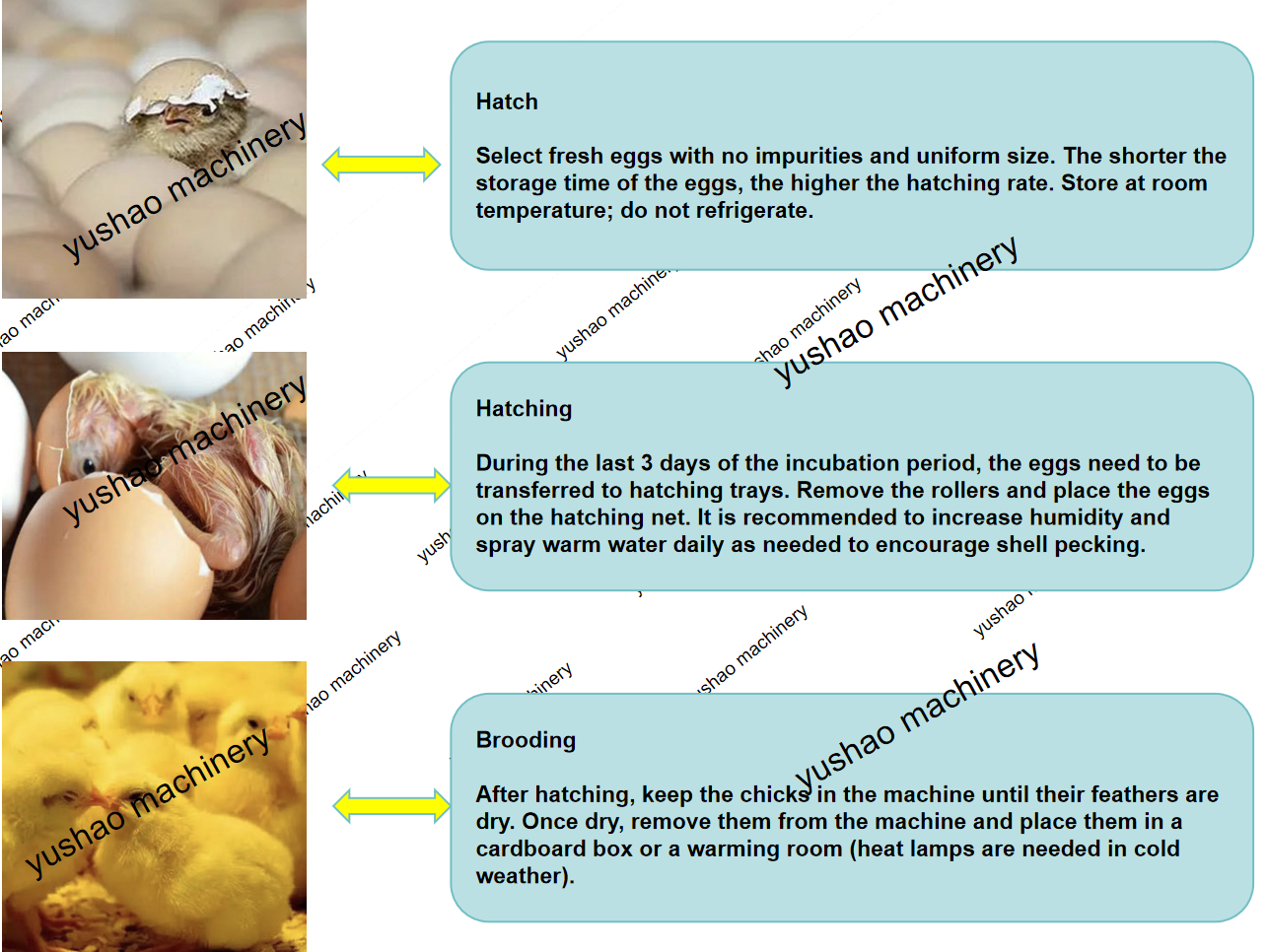
1. **Hatching Egg Selection:** Select fresh, uncracked, and undamaged fertile eggs.
2. **Pre-warming:** Turn on the machine in advance; load the eggs only after the internal temperature and humidity have stabilized.
3. **Incubation Phase (Days 1–18 for chicken eggs):** The machine automatically maintains constant temperature and humidity, performs timed egg turning, and manages ventilation. Candling is performed on days 7 and 14 to remove infertile eggs and dead embryos.
4. **Transfer to Hatching Trays (Day 19 for chicken eggs):** Stop egg turning and transfer the eggs to hatching trays; increase humidity and lower the temperature in preparation for hatching.
5. **Hatching:** Once the chicks have hatched, wait for their down to dry before removing them, completing the incubation process.
Incubation periods vary by poultry species: chicken eggs (21 days), duck eggs (28 days), goose eggs (31 days), and quail eggs (17 days).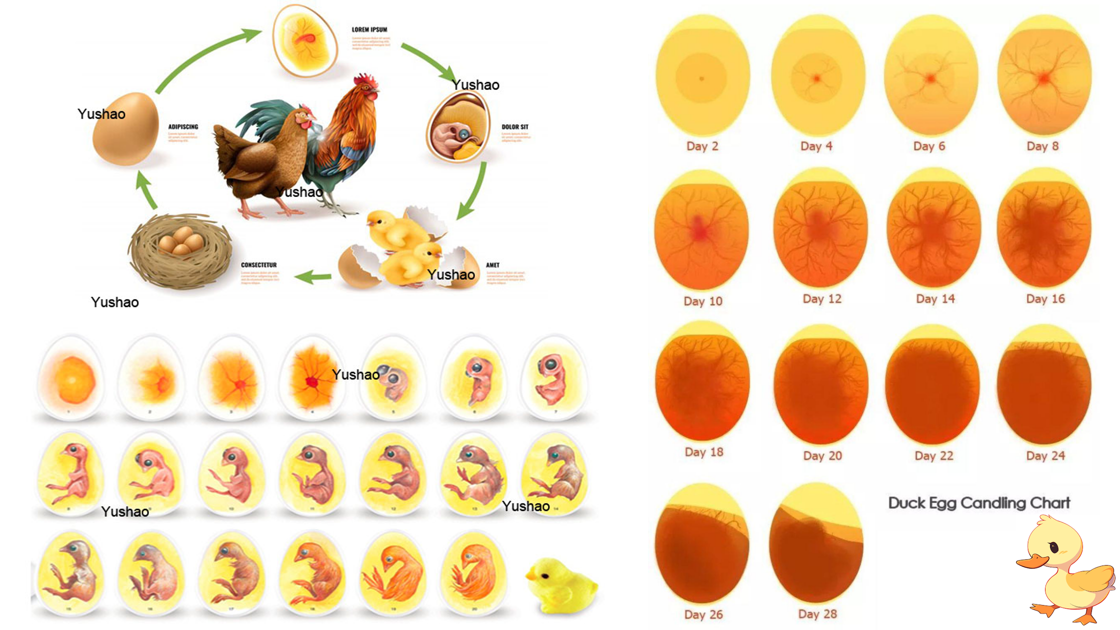
How to Choose the Right Egg Incubator for Your Needs
When selecting an egg incubator hatching machine, start by assessing your power access: if you have reliable grid power, an electric model will meet your needs at an accessible price point. If you operate off-grid or want to reduce your carbon footprint, a solar-powered egg incubator is a smart long-term investment. Also consider the number of eggs you plan to hatch: small tabletop models work for backyard hobbyists, while large capacity cabinet models are designed for commercial hatcheries.
No matter your operation size, a quality hatching eggs incubator that combines intelligent automatic control with flexible solar and electric power options will help you achieve consistent, successful hatching results every time.

totale 0 feuille,Télécharger 5 photos, chaque pas plus de 5M, pris en charge les formats jpg, jpeg, bmp, png, gif